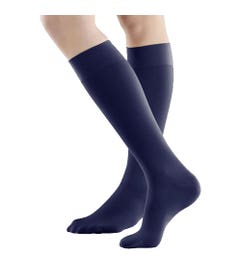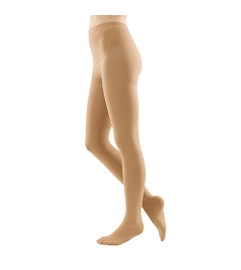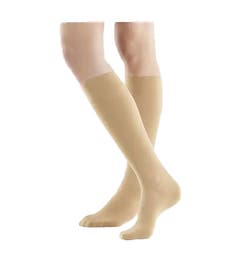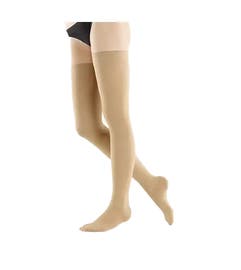

30-40 mmHg Compression Socks & Stockings
Compression for moderate to severe venous disorders; edema, functional insufficiency, varicose veins, and more. Talk with your physician to determine which compression grade is most appropriate for you. Check out our blog post on how to choose a compression sock.

Is 30–40 mmHg right for you? ⌄
Recommended if you have
- ✓ Lymphedema or lipedema, when firm compression has been advised
- ✓ Moderate to severe venous insufficiency
- ✓ Significant or persistent swelling that requires firm control
- ✓ A prescription or guidance to wear firm (30–40 mmHg) compression
Not recommended if you have
- – Known arterial circulation concerns (such as peripheral arterial disease, if diagnosed)
- – No prior experience with compression and no guidance to start at this level
- – Mild or occasional swelling only
- – Recent surgery unless specifically directed by your clinician
Common mistake: Choosing 30–40 mmHg for general comfort, when this level is intended for specific clinical needs.
Still unsure?
Don’t guess —
ask our Healthcare Team
to confirm the right compression level.
Easy Ordering:
1Select style
2Place order
3Delivered to your door
4Try them on
Shop 30–40 mmHg By Style
What length should I choose?
How to choose:
Select based on where you need compression, then consider comfort, wearability, and style.
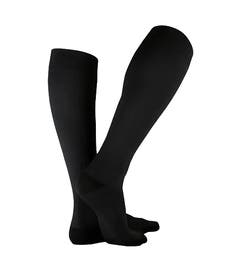
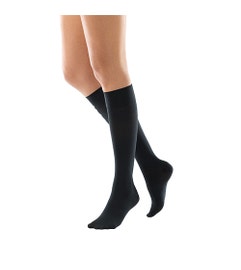
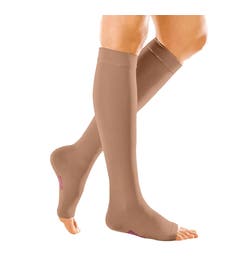
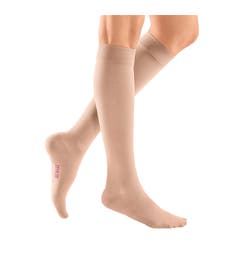
Knee High
Compression from the foot and ankle through the calf, decreasing in strength as you move up.
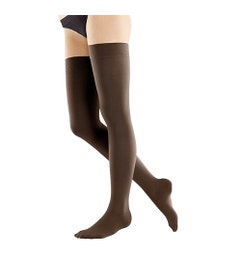
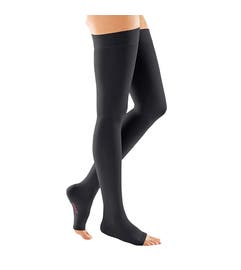
Thigh High
Compression from the foot and ankle through the knee and thigh, decreasing in strength as you move up.
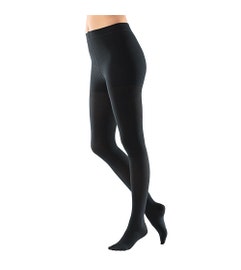
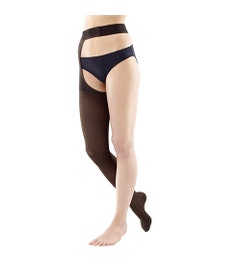
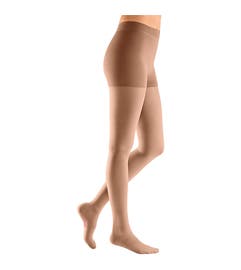
Waist High
Compression from the foot and ankle and up through the entire leg, decreasing in strength as you move up, with a supportive waist section that helps keep the garment securely in place.
Where is the compression applied?
The compression is graduated, meaning pressure is strongest at the foot and ankle and gradually decreases as it moves up the leg.
Shop All 30-40 mmHg Compression Socks & Stockings